
AFFILIATE DISCLOSURE: This page contains affiliate links. We earn a commission if you make a purchase through these links, at no additional cost to you. This helps support our research. Learn more in our Affiliate Disclosure.
Looking for the best smart thermostats on Amazon? This guide compares five standout picks across different budgets and smart-home setups—premium “do-it-all” options, a Matter-ready flagship with a room sensor, a multi-room comfort specialist, a privacy-focused DIY pick, and the best value choice for Alexa homes. We focused on real-world decision factors: HVAC compatibility, C-wire requirements, room sensors for hot/cold spots, app usability, smart-home platform support, and long-term value.
The 5 Best Smart Thermostats on Amazon

Rating: 9.6/10 ⭐⭐⭐⭐⭐
Pros
✅ Best overall “premium comfort” pick: SmartSensor included + built-in air quality monitoring
✅ Broad smart-home support (Siri, Alexa, Google Assistant) for flexible voice control
✅ PEK (Power Extender Kit) included for many installs without a C-wire (still check compatibility)
Cons
⚠️ Higher price than basic Wi-Fi thermostats
⚠️ If you want true whole-home room balancing, you’ll likely want additional sensors
⚠️ More advanced features = more setup time (app settings, comfort preferences, schedules)

Rating: 9.4/10 ⭐⭐⭐⭐⭐
Pros
✅ Best “future-proof” pick: Matter support for easier multi-platform smart-home integration
✅ Comes with a Nest Temperature Sensor (2nd gen) to target a specific room’s comfort
✅ Designed so no C-wire is required in most homes (always confirm with the compatibility checker)
Cons
⚠️ Premium-priced compared to basic smart thermostats
⚠️ The best experience is tied closely to the Google Home app ecosystem
⚠️ If you have a complex HVAC setup, you should double-check compatibility before buying
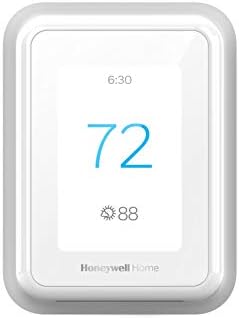
Rating: 9.0/10 ⭐⭐⭐⭐⭐
Pros
✅ Best for multi-room comfort: focus temperature control on the rooms you choose (sensor included)
✅ Great “traditional thermostat” feel with strong scheduling + app control
✅ Strong smart-home compatibility (works with major platforms; add sensors for more rooms)
Cons
⚠️ C-wire required
⚠️ Extra room sensors cost more if you want whole-home coverage
⚠️ More manual setup than learning-style thermostats (you’ll tune schedules/room priority)

Rating: 8.8/10 ⭐⭐⭐⭐☆
Pros
✅ Best value + privacy pick: Sensi states it won’t sell your personal info to third parties
✅ Clean touchscreen + DIY-friendly install approach
✅ Works with Sensi room sensors (sold separately) to help address hot/cold spots
Cons
⚠️ C-wire required
⚠️ Room sensors sold separately
⚠️ Voice control typically relies on your smart speaker ecosystem (not built into the thermostat)
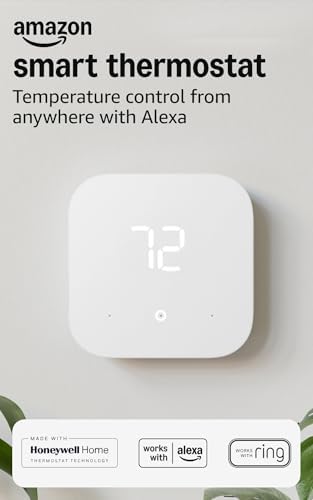
Rating: 8.5/10 ⭐⭐⭐⭐☆
Pros
✅ Best budget pick for Alexa households (simple app control + voice control via Echo devices)
✅ Newer model features let you use select Echo devices / Amazon Smart Air Quality Monitor as temperature sensors
✅ Often a strong “rebate-friendly” option (varies by utility/provider)
Cons
⚠️ Requires a C-wire power or adapter kit (sold separately) for many homes
⚠️ No microphone or speaker on the thermostat itself (voice control requires an Alexa device)
⚠️ Amazon notes it works with one Alexa account and uses 2.4 GHz Wi-Fi
How to Choose the Right Smart Thermostat
- Confirm HVAC compatibility first. Most smart thermostats are designed for typical 24V HVAC systems, but wiring and system type (heat pump, multi-stage, dual fuel, etc.) matters.
- Check your wiring (especially the C-wire). Some thermostats require a C-wire; others include installation helpers or are designed to work without one in many homes.
- Pick the smart-home ecosystem you actually use. Alexa-only is fine if your home is Alexa-first. If you mix platforms, look for broad compatibility (or Matter support).
- Decide if you need room sensors. If you have hot/cold spots or want the bedroom to be perfect at night, sensors are one of the biggest real-world upgrades.
- Look for long-term value. Energy reports, scheduling, “away” modes, and utility rebates can matter more than a fancy screen.
Smart Thermostat FAQ
Do I need a C-wire? Sometimes. Many smart thermostats require a C-wire for continuous power, but some models include install kits or are designed to work without a C-wire in many homes. Always run the brand’s compatibility check before ordering.
Are room sensors worth it? Yes—if your home has hot/cold spots, or if you care most about comfort in one room (like a bedroom at night). Sensors let the thermostat prioritize the temperature where you actually are, not just the hallway.
Can I install a smart thermostat myself? Many people can, especially if you already have a compatible wiring setup. If your system is complex (multi-stage, dual-fuel, unusual wiring), professional installation can save headaches.